The Keeper
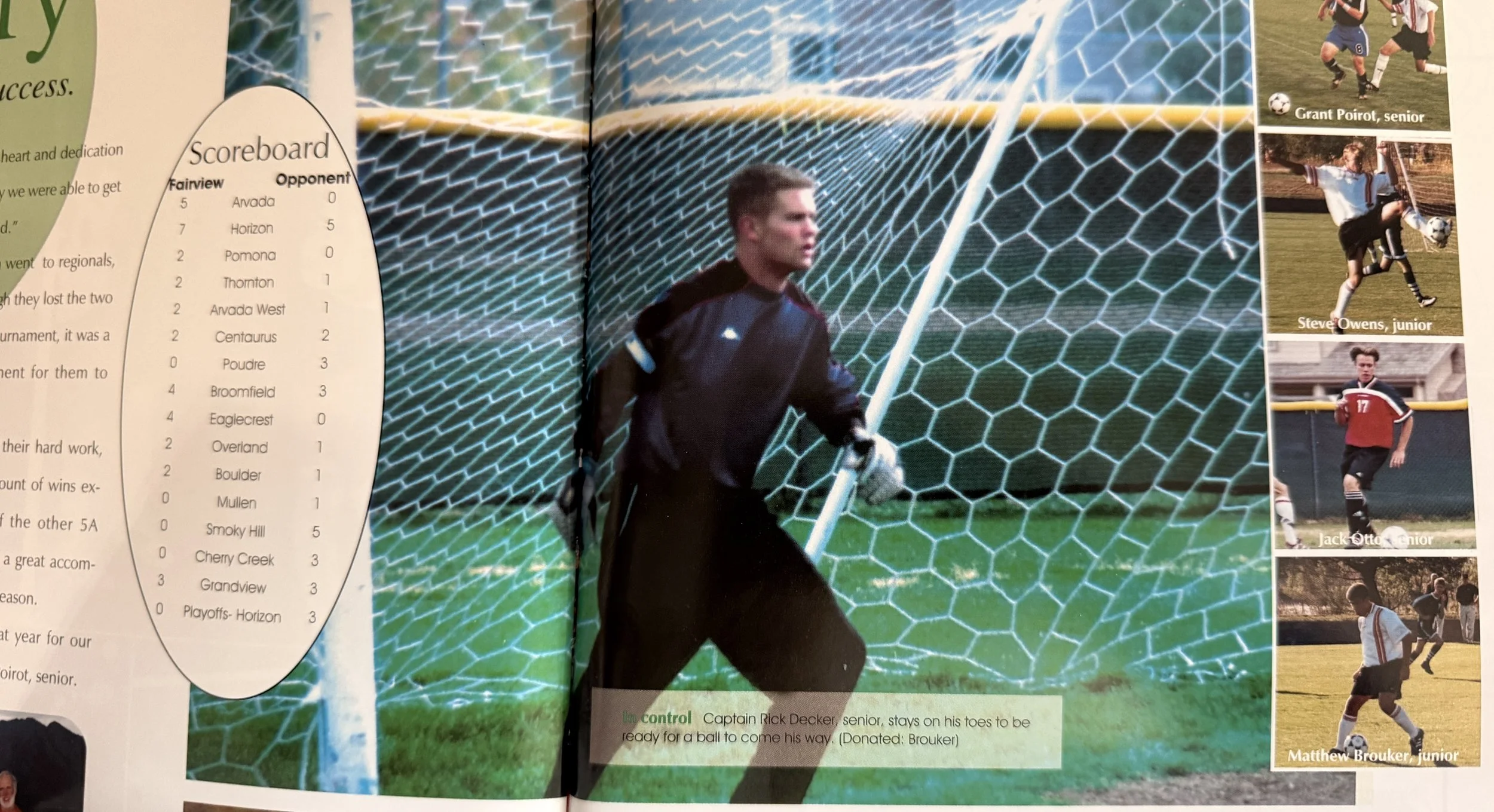
There was a time in my life when I worked very hard to not become “the soccer guy.”
In high school, I was known as the goalkeeper. The keeper. The athlete. The one people remembered for diving saves and muddy uniforms and showing up on weekends carrying the strange loneliness that comes with standing in a net while everyone watches your mistakes in high definition.
I was good at it. Really good.
And I hated how much identity came with that.
Not because I hated the game, but because I wanted more from life than being reduced to one thing. There were other parts of me I was trying to protect:
the guitarist, the thinker, the builder, the artist, the curious kid staring at music equipment he couldn’t afford, the future father I didn’t even know existed yet.
So over time, I quietly pushed soccer away.
Not dramatically.
Not bitterly.
Just carefully.
Enough distance to make sure it didn’t swallow me whole again.
And for years, that worked.
Then my daughters started playing.
Now they’re 10 and almost 12, which is such a strange and beautiful age. They’re standing in the doorway between childhood and identity. Old enough to care. Young enough to still be shaped by belief. This is the age where confidence starts forming permanent roots. Where a coach’s words matter more than they realize. Where one season can decide whether a kid sees pressure as fear or possibility.
Somewhere along the way, I started helping coach.
At first, I told myself I was just helping out. Filling in. Supporting the team. But slowly, almost annoyingly, I realized I loved it.
Not the winning.
Honestly, I couldn’t care less about the wins.
I loved watching a nervous first-year player finally settle the ball instead of panic kicking it.
I loved seeing combinations connect for the first time.
I loved watching girls realize they were capable of more than they thought.
I loved the quiet confidence that appears when a kid knows an adult believes in them.
And maybe most unexpectedly, I loved what it did to my relationship with my daughters.
Malia and I became closer this season. Soccer gave us a shared language. Long drives. Conversations after practice. Small moments that probably disappear if I stay emotionally guarded from the game.
McKinley and I already had that connection too.
That’s when the realization finally broke through the wall I had built years ago:
I don’t actually want a life where I avoid the things my daughters love simply because I’m afraid of being defined by them.
If you asked me what I truly want from life, the answer is actually very simple:
I want to spend as much time with my daughters as I can.
I want to support whatever lights them up.
I want to be present while they are still young enough to want me nearby.
It just turns out that, right now, the thing they love is soccer.
And maybe that changes the meaning of the game entirely.
Because I’m not returning to soccer to reclaim some former version of myself.
I’m not chasing identity.
I’m not trying to relive glory days.
I’m showing up because this has become one of the ways I love my kids.
That’s different.
Lately, I’ve also realized something else:
I never really stopped being a keeper.
Goalkeepers see the entire field. They organize chaos. They absorb pressure quietly. They protect vulnerable spaces. They help steady everyone else when things speed up.
Maybe that instinct never left.
Only now the role looks different.
Now it’s encouraging the first-year player who thinks she doesn’t belong.
Now it’s reminding stronger players that leadership means lifting teammates up.
Now it’s trying to create an environment where kids aren’t defined too early by labels like “A team” and “B team.”
Now it’s protecting joy before youth sports turns everything into performance and comparison.
And honestly, maybe that’s why I resisted coaching for so long.
Because deep down, I knew this was never just about soccer. It was about influence. About responsibility. About shaping how young people experience confidence, failure, teamwork, pressure, and themselves.
That’s heavier than wins and losses.
The funny thing is, the wall I built all those years ago wasn’t protecting me from soccer.
It was protecting me from becoming one-dimensional.
But somewhere between practices, sideline conversations, and watching my daughters grow into themselves, I realized something I wish I understood earlier in life:
Soccer is not who I am.
It’s simply one of the places where who I am gets expressed.