Fortune, Favor, and the Roads I Didn’t Take
I once sat in classrooms where the future had already happened.
At Northeastern University, I was majoring in music industry and taking copyright law for musicians just a couple years after Napster blew open the entire business. The founder, Shawn Fanning, had sat in those same rooms not long before me. I wasn’t studying a stable profession. I was studying the crater.
Professors were rewriting syllabi in real time.
Copyright law stopped being abstract and became existential.
We argued whether an MP3 was a copy, a performance, or something the law didn’t yet have a word for.
The quiet realization hung in the room that the rules were already behind the technology and always would be.
Outside class, I carried an early Windows-compatible iPod through Boston and New York. You could spot others instantly by the white headphones. We’d give each other a subtle nod, like we were part of a small, temporary future. One minute you were trading files in dorm rooms, the next you were parsing statutes written for piano rolls and vinyl trying to stretch them over broadband.
I watched an industry break while I was learning its rulebook.
But the story actually starts before Boston, with a list.
A literal list of schools with two non-negotiables: Division I soccer and a music industry program. Sitting confidently at the top was Loyola Marymount University.
California felt inevitable. My family vacationed there growing up. My oldest sister graduated from Pepperdine University. My other sister attended University of California, Santa Barbara. Friends were already in Los Angeles chasing acting and music. I could picture my life there so clearly it barely felt hypothetical.
Then I didn’t get in.
First heartbreak, then anger. The productive kind. Instead of retreating, I redirected it.
Fine. I’m going to Boston.
So this Boulder-California kid went east to Northeastern, a coast I’d barely experienced beyond a single trip to Maryland for a soccer tournament. Weather, accents, brick, history, distance from everything familiar. I didn’t know it at the time, but I was already living a quote I wouldn’t hear until years later: fortune favors the bold.
The co-op program dropped me straight into reality. Sophomore year I worked for Ralph Jaccodine at Boston Managers Group. On paper it was exactly what I wanted. Music industry access and credibility.
In practice, it was human.
Ralph was going through a divorce while I worked for him. Watching that up close didn’t scare me away from music. It recalibrated me. I saw how demanding the industry could be and how little room it sometimes left for presence, for family, for being a whole person.
At the same time, the business itself felt unstable. Napster had already cracked the foundation and nobody convincingly knew what replaced it. Copyright law felt like emergency response training. I had a strong sense that sticking around to “find out” might slowly cost me my relationship with something I loved.
I didn’t want music to become survival.
I wanted it to remain joy.
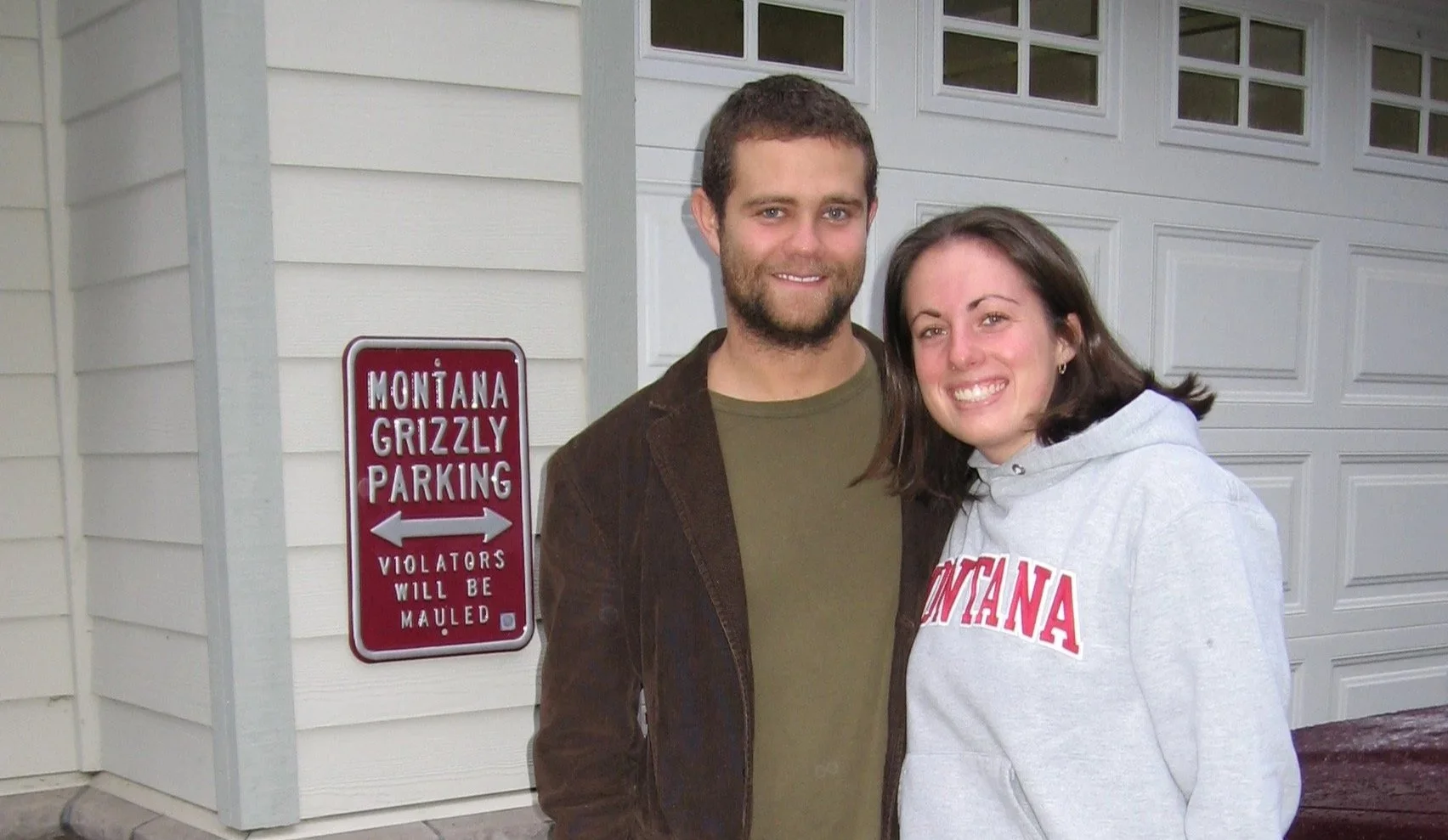
So I transferred. Changed my major to business. Headed west again, but not to California. To Montana, to Missoula.
And that is where I met Mariah.
That part isn’t a footnote. It’s the point.
It’s easy to frame this as rational decision-making. Industry instability. Career flexibility. Family priorities. All true. But underneath it is a quieter pattern: paying attention early, leaving before resentment sets in, choosing people over prestige, and protecting the things I love by refusing to make them carry my survival.
Sometimes the schools you don’t get into are doing you a favor. Sometimes a closed door reroutes your entire life toward something you never would have designed on purpose.
I don’t really wonder what would have happened if I went to LMU.
I know exactly what happened because I didn’t.
Fortune favored the bold.
Just not in the direction I expected.