The River Looks Different From the Top
I was listening to White Man’s World by Jason Isbell when the thought landed sideways.
The song starts, “I’m a white man living in a white man’s world.”
Not accusatory. Not defensive. Just… observational. Like naming the current you’re already floating in.
And for some reason, it made me think about kayaking.
When you’re standing at the top of a mountain, the climb never looks that bad. The switchbacks disappear. The loose rock blends into the trail. You forget how many times you stopped to catch your breath.
Rivers do the same thing.
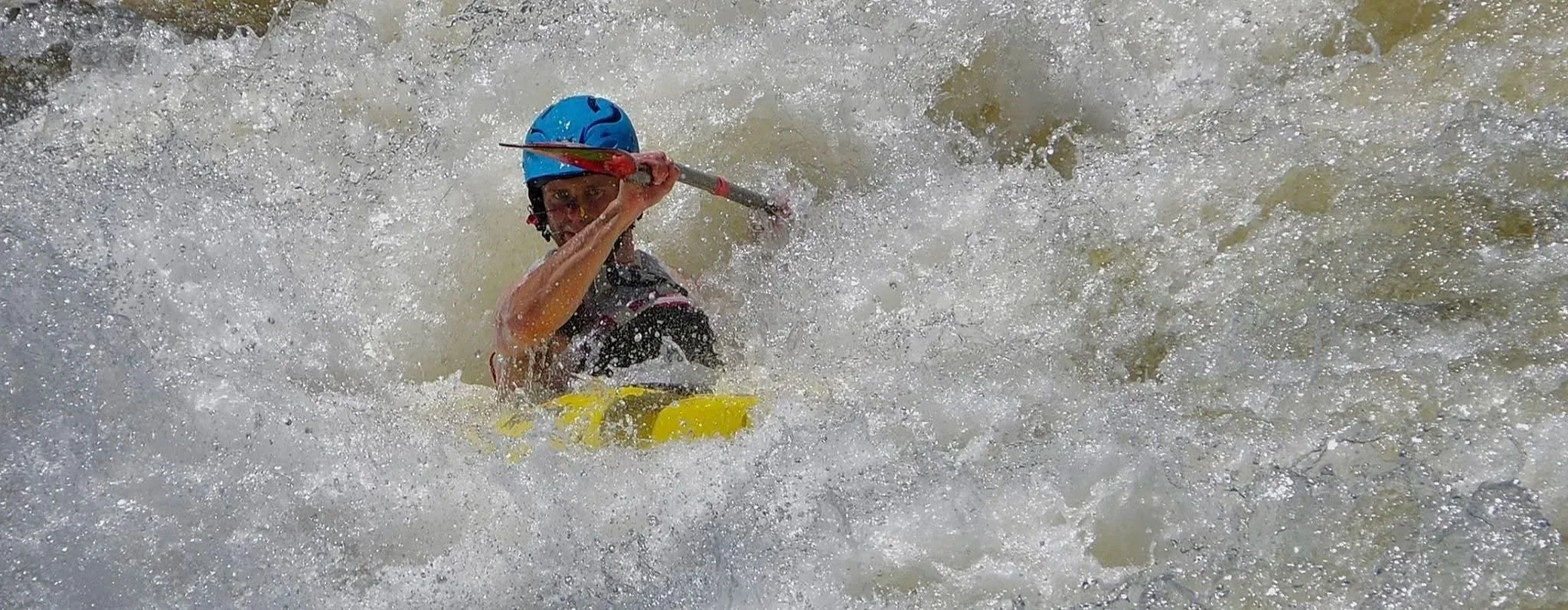
I paddle around Sandpoint with a buddy named Nick. He’s an exceptional kayaker. If he doesn’t have the first descent on a local run, he’s probably the second or third. I’m solid class IV. Confident enough to know my limits. Careful enough to respect what’s above them.
What I’ve noticed over the years is how often experienced paddlers minimize the complexity of a run. Not out of ego. Not maliciously. Just naturally.
“It’s pretty straightforward.”
“Nothing too spicy.”
“You’ll be fine.”
And from their boat, it’s true.
They’ve already done the math. The ferry angles live in their muscle memory. They know where the eddies hide and which mistakes are survivable. The danger hasn’t disappeared. It’s just been internalized.
But when that same description gets handed to a newer paddler, something important goes missing. The complexity doesn’t go away. It just becomes invisible.
That’s when the lyric clicked.
Because I’ve heard the same thing outside of rivers.
Older white men talking about success often sound a lot like seasoned paddlers describing a run they forgot used to scare them.
“I just worked hard.”
“I took risks.”
“You’ve gotta want it.”
None of that is wrong. And none of it is the whole story.
What’s usually left out are the scouts they didn’t know they had. The safety set downstream. The fact that when they flipped, someone already knew how to throw a rope.
This isn’t even a conversation about privilege yet. This is just about perspective.
Competence erases its own history.
The better you get, the harder it is to remember what it felt like not knowing what was around the bend. And when you forget that, struggle starts to look like a personal failure instead of a harder section of river.
That’s where the bootstraps mentality sneaks in.
If the run wasn’t that hard, then the swimmer must be reckless.
If the climb was just effort, then the person still climbing must not want it badly enough.
It’s comforting logic. It turns survival into virtue. It lets us believe the river is fair.
But rivers aren’t fair. They’re just rivers.
What I love about Isbell, and why that lyric keeps opening new doors for me, is that he doesn’t deny where he’s standing. He also doesn’t pretend he built the mountain himself. He names the water. Quietly. Without apology or performance.
That same awareness shows up all over his writing. In the way he talks about love, time, recovery, belonging. Not as victories, but as things he was helped through. Things that could’ve gone differently.
That’s the kind of humility I want my girls to grow up around.
Not the kind that downplays effort. But the kind that refuses to pretend things were never hard.
Humility sounds like:
“This looks easy because I’ve done it a lot.”
“I didn’t know this at first either.”
“Someone helped me there.”
“I was scared the first time too.”
No lectures. No manifestos. Just honest river talk.
Because when you don’t minimize complexity, you give people permission to struggle without shame. You teach them that ability grows, that fear is data, and that asking for help doesn’t mean you’re weak. It means you’re still learning the river.
The top of the mountain will always make the climb look shorter than it was.
The trick is remembering what it felt like to be halfway up, lungs burning, wondering if you picked the right route at all.
That memory is the difference between experience and wisdom.
And maybe that’s what living in any world with a soft heart actually requires. Not denying where you are. Just being honest about how you got there, and who helped keep you upright along the way.
Lately I’ve noticed my girls watching more than listening.
They watch how I explain things. Whether I rush past the hard parts or slow down long enough to name them. Whether I pretend something was easy or admit it took time, help, and a few swims.
Sometimes that looks like standing on the bank, pointing downstream, and saying, “There’s a clean line here, but we’ll scout it first.” Not because I don’t trust them. Because I do.
I want them to grow up knowing that confidence doesn’t come from pretending the river is simple. It comes from learning how to read it, asking questions, and knowing when to eddy out.
There’s a line in If We Were Vampires that always lands softer than it sounds.
“Maybe time running out is a gift.”
Maybe it is.
Maybe knowing we don’t have forever is what makes us more honest about the help we’ve received. More careful with the stories we tell about how we got here. More willing to leave a map instead of a myth.
The river will look different from the top for them someday too.
I just hope when they describe the run, they remember to say where the eddies were.