Fear and Fire at Ten: Ryan Bingham’s Rose Hill Drive Era
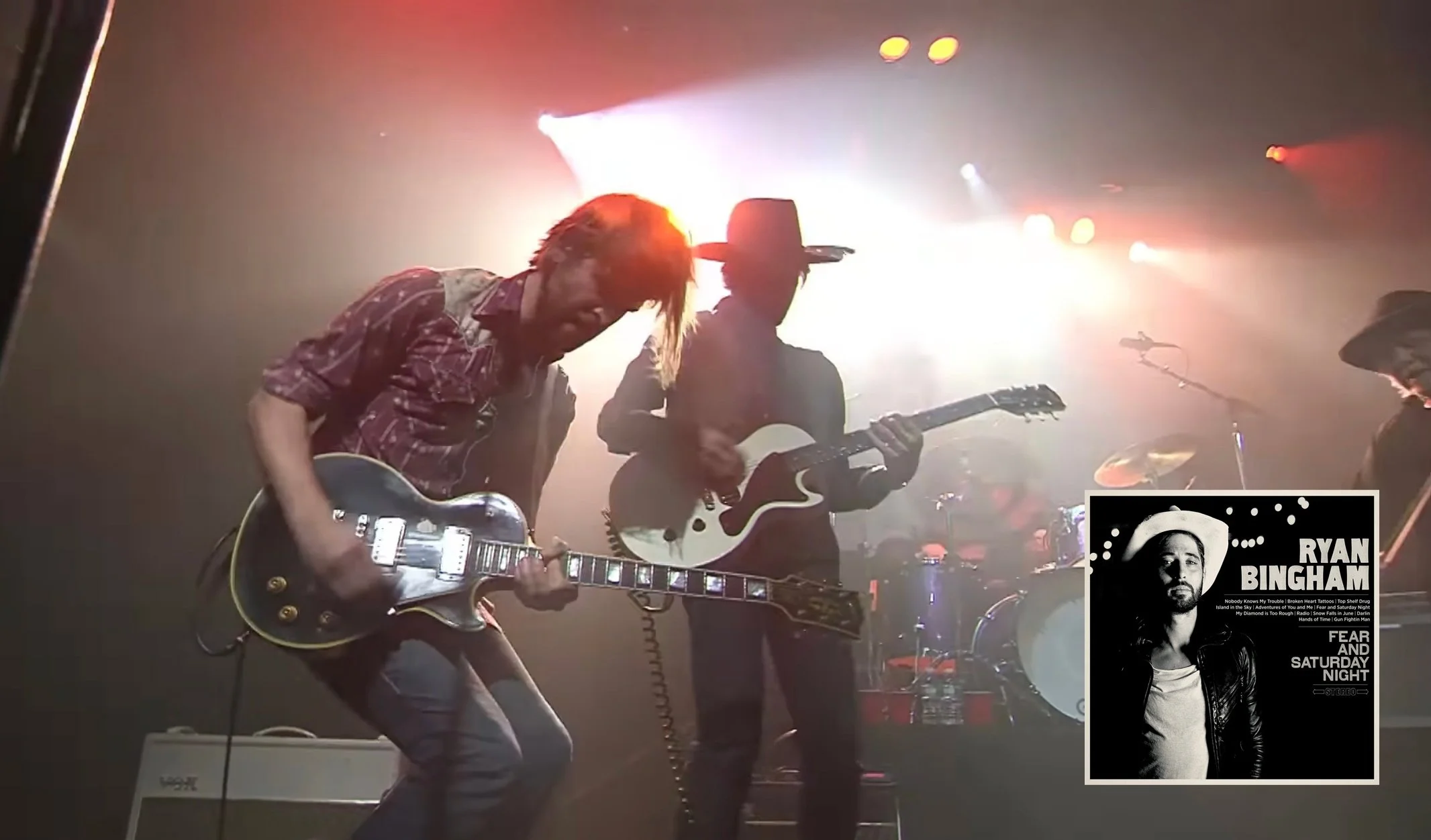
Daniel at the edge, Ryan in the groove, Nate in the engine room; the trio that made Bingham’s music burn brighter and louder.
“It wasn’t just an album — it was a moment. Lightning in a bottle, stamped forever into Ryan Bingham’s history.”
Ryan Bingham has always sounded older than his years. From the moment his whiskey-and-dust voice carried The Weary Kind through Crazy Heart, listeners pegged him as a songwriter built for lonesome highways and smoke-stained barrooms. But there was a moment — a brief, combustible stretch — when Bingham’s music became something bigger, louder, and less predictable. That moment was Fear and Saturday Night, released ten years ago, and the spark came from two Boulder musicians: guitarist Daniel Sproul and drummer Nate Barnes of Rose Hill Drive.
Sproul and Barnes didn’t just back Bingham — they detonated around him. Sproul’s guitar could snarl like a Les Paul in a garage and then, in the same phrase, lean into a country twang without cliché. His tone gave Bingham’s ragged voice a rough-edged halo. Barnes, meanwhile, drummed with a rock player’s urgency — hard-hitting but tightly controlled, never letting the music collapse under its own weight. Together, they turned Bingham’s shows into something closer to a revival than a recital.
That’s what made Fear and Saturday Night stand out then — and what still sets it apart a decade later. The songs were pure Bingham: dusty narratives of heartbreak and endurance. But with Sproul and Barnes, even the quietest moments carried an electric undercurrent, as if each track could break into a roar at any second. On record, it was invigorating. On stage, it was combustible.
Take Bluebird. In the studio it’s a sturdy cut; live, it became volcanic. The band would stretch the tune until it blurred the line between country ballad and jam-rock freefall. One night it might run five minutes, the next it might double, with Sproul peeling off solos while Barnes and Bingham drove it harder and harder. The crowd didn’t just listen; they braced themselves. As one fan put it, “Ryan wasn’t steering the ship — he was hanging on for dear life.”
Even when Bingham stepped out alone, you could hear the imprint of that partnership. The strums were heavier, the phrasing more jagged, the rasp in his voice leaning into the growl as if Sproul and Barnes were still in the wings. It’s the same phenomenon Springsteen fans recognize in his solo shows: even stripped bare, the E Street Band is still in the room.
In the years since, Bingham’s records have drifted closer to Americana tradition — slower tempos, pedal steel, fiddle flourishes. They’re strong works, but the jagged edge is softer. Fear and Saturday Night, now ten years old, remains singular because it wasn’t only a songwriter’s album. It was a band’s album, a record written to be tested under lights, sweat, and volume.
Rose Hill Drive themselves never broke through commercially, despite admiration from the likes of Pete Townshend and the Black Crowes. They were, as more than one critic put it, “your favorite band’s favorite band.” Their legacy now exists partly in the memories of those who saw them — and in the fire they lit under Ryan Bingham for a brief, unforgettable run.
That’s why fans still talk about that period with reverence. It wasn’t just the songs; it was the chemistry, the sense that anything could happen once the lights went down. Lightning in a bottle rarely lasts, and maybe that’s why it resonates so deeply. Ten years on, Fear and Saturday Night still feels alive — a moment when Ryan Bingham didn’t just sing about the chaos of life, he stood in the middle of it, with Sproul and Barnes setting the whole stage ablaze.